
Quality Assurance & Inspection Process

Quality Assurance & Inspection

EndoTech's Quality Assurance Management team monitors production from raw-material selection through final inspection. Our quality approach focuses on checking instruments against the applicable product requirements, identifying discrepancies and reviewing finished products before shipment.

Material Review Dimensional Checks Functional Inspection Final Quality Review
Surgical instruments undergoing inspection at EndoTech
Inspection Before Shipment Finished instruments are reviewed against applicable specifications and workmanship requirements.
Our Quality Approach

Quality Checks Throughout Production

Inspection is most useful when requirements are clear before production begins. EndoTech's published quality information describes checks at multiple production stages rather than relying only on a final visual review.

Check Against the Required Specification

Dimensions, materials, finish and functional characteristics differ between instrument types. The inspection criteria should therefore follow the product specification and any agreed customer requirements.

For OEM orders, buyers should identify critical dimensions, working-end features and acceptance requirements before approving the production sample.

Review More Than Appearance

A polished instrument can still have a dimensional or functional issue. Quality review should consider the relevant material, geometry, workmanship, movement and working-end characteristics for the specific instrument.

The applicable checks vary by instrument construction. Not every test is relevant to every product.
Inspection Checkpoints

What Is Checked During Surgical Instrument Quality Control?

These are the main areas a product-specific inspection plan should cover. The checks used for a particular instrument depend on its design, specifications and intended function.

01

Incoming Material Review

Review the received material against the specified grade, identification and condition. Where material documentation is required, it should be checked against the order or purchasing requirements.

02

Dimensional Measurement

Check defined lengths, working dimensions, jaw or tip configuration, alignment and other critical measurements using appropriate measuring equipment.

03

Workmanship & Surface

Review visible finish, surface condition, burrs, marks, alignment and workmanship against the product's acceptance criteria.

04

Functional Checks

Where applicable, verify opening and closing, joint movement, locking action, jaw alignment, cutting performance or the relevant working-end function.

05

Specification Conformity

Compare the instrument with the approved specification or sample where one has been agreed for the order.

06

Final Inspection & Release

Review the finished instrument against applicable acceptance criteria before it is approved for packing and dispatch.

Dimensional Quality Control

Measurement Matters When Specifications Matter

Dimensional checks help determine whether the inspected instrument matches its defined measurements and product requirements.
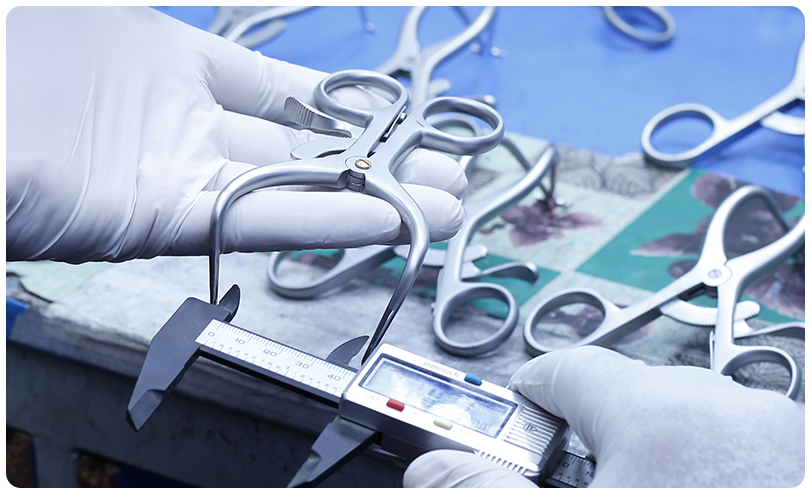
Digital measurement checker measuring a surgical instrument at EndoTech
Measurement checking — the relevant measurement method and acceptance limits depend on the instrument specification.

Measure the Features That Affect the Instrument

A dimensional inspection should be based on the product drawing, agreed specification or approved reference. The inspector needs to know which measurements are critical and what limits are acceptable.

Depending on the instrument, the inspection plan can include:

  • Overall length and working length
  • Jaw, tip, blade or working-end dimensions
  • Alignment and relationship between working components
  • Handle dimensions and other specified features
  • Comparison with an approved sample where applicable

Buyers with an OEM specification should identify critical dimensions before sample approval. This gives both parties a clear reference for subsequent inspection.

Workmanship & Functional Review

Inspect the Details That Affect Product Conformity

Appearance, movement and working-end characteristics need to be reviewed according to the type of surgical instrument. A single generic test cannot replace product-specific criteria.

Visual & Workmanship Inspection

The surface and overall workmanship are checked against the instrument's required finish and acceptance criteria.

  • Surface finish and visible marks
  • Burrs, defects or unacceptable sharp edges
  • Alignment of relevant working components
  • Consistency with the approved product appearance

Functional Inspection Where Applicable

Moving parts and working ends require checks appropriate to their function and design.

  • Opening and closing movement
  • Joint tension or locking action, where fitted
  • Jaw or tip alignment
  • Cutting or gripping action, where applicable
Product-specific testing: Not all instruments have hinges, ratchets, cutting edges or moving parts. The applicable inspection checks should be selected from the requirements for that instrument rather than applied indiscriminately to every product.
Before Dispatch

Final Inspection Before Shipment

Final inspection brings the relevant checks together before instruments are released for packing and dispatch.

Surgical instruments presented for final inspection at EndoTech

A Defined Checkpoint Before Release

Final inspection is the opportunity to verify that the finished instrument meets the applicable product and order requirements. The acceptance criteria should be established before inspection begins.

  • Confirm the correct product and specification
  • Review applicable measurements and workmanship
  • Complete functional checks where required
  • Review any inspection findings that remain unresolved
  • Confirm that the product is approved for the next stage

Packaging and shipment should follow the agreed order requirements after the required release checks are complete.

Handling Inspection Findings

What Happens When an Instrument Does Not Meet Requirements?

A credible quality process must address products that fail an inspection or do not match the agreed specification. The affected item should not be treated as conforming until the issue has been reviewed and resolved.

Step 01

Identify the Issue

Record the nonconformity clearly, including the affected feature and the requirement that was not met.

Step 02

Hold for Review

Keep the affected product separate from approved product while an authorized person evaluates the issue.

Step 03

Decide the Disposition

Determine whether the item can be reworked, must be rejected or requires another documented disposition.

Step 04

Recheck Before Release

Where rework is authorized, inspect the affected feature again before the item is considered conforming.

Quality-control principle: An unresolved inspection failure should not be hidden by polishing, re-packing or moving the instrument to the next stage. The decision and any required corrective action should follow the applicable documented quality procedure.
Inspection Information

Clear Acceptance Criteria Help Buyers Verify Quality

Inspection is easier to understand when the product requirements are defined before the order is produced. This is particularly important for OEM buyers and repeat orders.

Information Buyers Should Define

Share the requirements that will determine whether the instrument is acceptable.

  • Product reference, SKU or technical drawing
  • Critical dimensions and tolerances
  • Required material and surface finish
  • Functional acceptance requirements
  • Approved sample or reference instrument, where applicable

Inspection Records & Documentation

Buyers can discuss which inspection reports, measurement results, material documents or other quality records are maintained and available for their products.

The available documentation depends on the product, order requirements and the records maintained under the applicable quality process.

Sensitive customer information and confidential product specifications should be removed before any example inspection record is shared publicly.

International Buyer Support

Quality Information for Importers & Distributors

Buyers need to understand what is inspected, which requirements apply to their products, and what documentation is available before arranging a shipment.

Plan Inspection Requirements Before Production

For U.S. and international sourcing, agree on critical dimensions, working-end requirements, materials, finishes and any product-specific acceptance criteria during the quotation and technical review stage.

Where a buyer requires a particular report or record, it should be discussed before production so availability and requirements can be confirmed.

For regulatory and certificate questions, visit the Certifications & Compliance page and request current documentation relevant to the product and destination market.

Discuss Quality Requirements With EndoTech

Send your product list, reference instruments, drawings, quantities and inspection requirements. EndoTech can review the information and discuss the quality criteria applicable to the proposed order.

Contact EndoTech about your requirements →

Quality Assurance FAQ

Frequently Asked Questions

Answers to common buyer questions about surgical instrument inspection and quality requirements.

What is included in surgical instrument quality inspection?
Depending on the instrument, inspection can include material review, dimensional measurement, workmanship and surface checks, functional testing where applicable, comparison with approved specifications and final inspection before shipment.
When does EndoTech check instrument quality?
EndoTech's published company information describes its Quality Assurance Management team as monitoring production from raw material selection through final inspection, with checks at multiple production stages.
How are surgical instrument dimensions checked?
Relevant dimensions are checked against the applicable specification, drawing or approved reference. The measurement points and acceptable limits depend on the product.
Are all instruments tested in the same way?
No. Inspection depends on instrument construction and function. For example, joint movement applies to instruments with joints, while working-end or cutting checks apply only to relevant products.
What happens if an instrument fails inspection?
A nonconforming instrument should be identified and held from release pending review. The responsible quality personnel should determine the appropriate disposition under the applicable procedure and verify any authorized rework before release. Buyers should confirm the supplier's current documented nonconformity procedure during qualification.
Can buyers request quality inspection records?
Buyers can ask which inspection records or reports are maintained and available for their particular product or order. Availability should be confirmed during quotation or technical review.
Can OEM buyers define their own inspection criteria?
Buyers should share critical dimensions, materials, finishes, functional requirements and acceptance criteria during technical review. Any agreed requirements should be clarified before sample approval and production.
Where can I review EndoTech's certification information?
Visit the Certifications & Compliance page. For current procurement, request the certificate documents applicable to the products and intended market.
How is this page different from Manufacturing Strength?
Manufacturing Strength explains production capability and manufacturing stages. This page concentrates on inspection criteria, measurement, workmanship, applicable functional checks, final product review and the handling of inspection failures.
Discuss Your Quality Requirements

Need Inspection Information for a Surgical Instrument Order?

Send EndoTech your product list, specifications, reference instruments and quality requirements. The team can review the request and discuss the applicable inspection criteria and available documentation for your order.